Artificial Intelligence is changing how businesses run. From automating those repetitive chores to looking through huge amounts of data in seconds, AI is pushing organizations to move more quickly, be more clever, and run more smoothly. Across different industries, firms are increasingly adopting AI to boost output, strengthen customer interactions, and simplify the decision-making process. It’s like, everything feels faster now, even when the operations are complicated.
As these technologies keep advancing, this kind of question comes up… what actually happens to the human role in the workplace, when everything speeds up?
While AI is capable of remarkable achievements, it’s important to see that technology and human expertise are not exactly direct rivals. AI shines at processing information and doing the routine tasks, whereas humans add those qualities that are still hard to clone. These uniquely human powers keep showing up in a major way for business, leadership, and innovation, too.
The Rise of AI in the Workplace
The adoption of AI is accelerating across industries, and honestly, it feels like it’s outpacing expectations. Companies are using smart systems for customer help desk tasks, marketing analysis, financial forecasting, hiring and recruitment, and day-to-day operations management. Tasks that used to take hours of manual effort now get handled in minutes, or at least way sooner than before.
This transformation is creating notable opportunities for organizations, employees can spend less time doing repetitive stuff, and really focus more on strategy, creativity, and problem-solving. At the same time, the growth of automation has also triggered worries about job displacement and what comes next for work. Some people feel the change is inevitable, others think it should be handled more carefully.
While some roles are evolving, history shows that tech advancements often create new opportunities alongside new challenges. The key part today is getting clear on which skills stay uniquely human, not just new tools or faster automation.
Why Human Connection Still Matters
One area where humans still have some real edge is in relationship building. Trust, empathy, and emotional intelligence are kind of the bedrock for a lot of industries, and for professions in general.
Whether it is a real estate consultant , guiding a client through a big investment, or a hospitality professional who crafts memorable guest experiences, or even a business leader who gets a team moving, still the human thing, like interaction, stays extremely valuable. AI can absolutely offer info, and some suggestions, but those real connections are built through grasping people, open communication and trust.
In sectors like healthcare, consulting, education, and luxury hospitality, the human side defines the customer experience. People might enjoy the efficiency part, but they also tend to value a real connection, something more personal than just speed.
Creativity Beyond Algorithms
Artificial intelligence can create content, analyze trends, and even generate designs. But real creativity isn’t just about stringing together what’s already around. It needs imagination, genuine originality, and a knack for linking ideas in odd, unexpected patterns.
A lot of the world’s most successful companies were built on visionary thinking, not just data alone. Entrepreneurs, designers, and innovators tend to win because they spot opportunities that most people miss.
AI can support creative processes, but it doesn’t really have personal experiences, inner intuition, or cultural context the way humans do. Being able to craft compelling narratives, shape meaningful brands, and form emotional links still feels like a distinctly human advantage, not an AI thing exactly.
Leadership and Strategic Thinking
Effective leadership goes past just making decisions based on data. Leaders have to get teams inspired, while also dealing with uncertainty, sorting through disagreement, and move forward with choices when there’s no clear answer.
Business decisions are often pushed around by things that can’t be counted precisely, like company culture, employee morale, market mood, and the long‑term direction. Even if AI can bring useful clues, strategic leadership still leans on background, lived experience, and yes, human judgment.
Organizations will continue to depend on leaders who can balance analytical information with instinct and emotional intelligence.
The Growing Value of Human Skills
As AI continues to be integrated into business operations, human skills may become even more precious. “Communication, adaptability, critical thinking, collaboration and creativity are more and more recognized as necessary strengths in the workplace.
Employers are searching for people who can work side by side with technology rather than compete with it. The coming workspace seems to be set to favor professionals who mix technical know-how with clear interpersonal skills and some leadership abilities.
This shift is also changing how professionals perceive career development. Continuous learning, personal branding, and adaptability are becoming valuable skills in an AI-powered economy.
The Future Is Collaboration, Not Competition
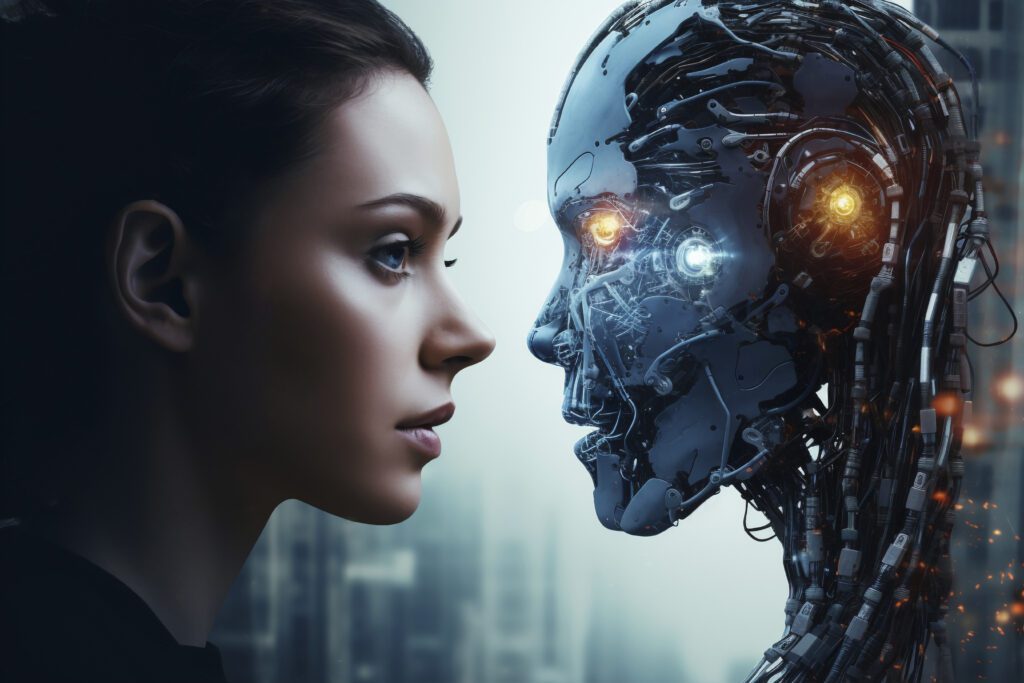
The AI conversation is often framed as humans vs machines but the truth is much more collaborative. Artificial intelligence is a tool. It can improve human abilities but not completely replace them.
The best results will probably come from businesses that successfully adopt AI and invest in human talent. Technology can make us more efficient and give us insights, but people are still responsible for innovation, leadership, and meaningful relationships.
In the end, the future of work will not be determined by what AI can do on its own. It will be shaped by how humans and technology work together.
The most significant advantage of the AI era might not be automation, but the uniquely human attributes that continue to inspire trust, creativity, leadership, and progress. As technology evolves, these skills will continue to be some of the most valuable assets any individual or organization can have.