
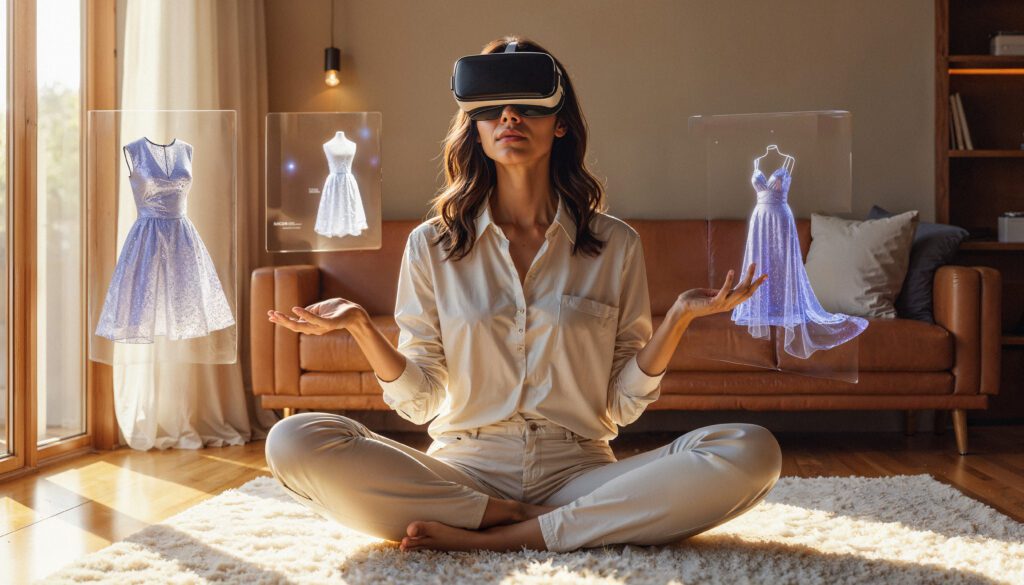
Fashion has always developed along with society. From the creation of artificial fabrics to the development of fast fashion and online shopping, technology has continually redefined the design, manufacturing, marketing, and consumption of clothing.
Now, another revolution is taking place.
It is increasingly difficult to distinguish fashion from technology as fashion designers, tech firms, and luxury houses start experimenting with garments that not only look good but can also do much more. Smart fabrics, wearable technologies, smart garments reacting to temperature change, and even digital shopping experience make this particular intersection of technology and lifestyle highly exciting.
The future of fashion might not be only about what we wear, it could also be about what our clothes can do.
What Is Smart Fashion?
Smart fashion includes clothing, shoes, accessories, and fabrics made use of technology or innovative material that gives functions other than aesthetics and comfort.
Some smart clothes have embedded sensors that capture data, whereas some clothes are capable of responding to the environment in terms of temperature, motion, or light. Technology may also be added to clothing using accessories, electronics, and fabrics that provide certain kinds of performance capabilities.
This is a totally new classification in between fashion and technology.
Smart fashion is not just about wearing clothes, but rather about using them to interact with the world around us.
From Wearable Technology to Smart Clothing
Wearable technology is not new to consumers in the form of smart watches, fitness bands, and other wearable devices. Smart fashion goes one step further by incorporating technology in fabrics.
Sportswear is perhaps the most promising of all.
Smart clothes can be developed with the ability to track motion, help in sports activities, control temperature, or enhance comfort levels while being physically active. Therefore, the relevance of smart clothing becomes obvious in the case of athletes and fitness lovers.
As technology becomes smaller, lighter, and more flexible, the possibility of integrating electronics into everyday clothing becomes increasingly realistic.
Technology Is Changing Fashion Design
Technology is also revolutionizing the process of design.
Designers can now use computer technology such as software, digital modeling, AI, and 3D technology to try out forms, materials, colors, and patterns before the actual clothing is produced.
It will not only save time but also make it possible for designers to try various ideas without having to develop various physical prototypes.
Also, the 3D printing process is creating new opportunities. Designers can explore strange designs, customized accessories, and new materials, which could be tough to manufacture through traditional methods.
The outcome is a fashion industry that increasingly sees creativity and technology collaborate.
AI and Personalized Fashion
Artificial intelligence is starting to have an impact on how people find and buy clothes.
Online fashion platforms can also analyze people’s preferences, past purchases, browsing behavior, and sizing information to serve more personalized recommendations.
This helps brands offer a customized shopping experience for customers and helps them discover products that suit them.
Additionally, AI can help designers and merchandisers to understand the consumer trends and patterns through demand analysis.
However, the most intriguing developments will occur when artificial intelligence is incorporated into the physical goods.
Imagine clothing that would adapt to the user’s taste, suggest combinations, or even change its behavior according to the external environment. While not all of these ideas have been fully realized yet, the trend is set: fashion becomes more personalized.
Smart Fabrics and Responsive Materials
The emergence of advanced fabrics represents one of the most fascinating trends in smart fashion.
Some of the developments that researchers and companies are investigating include fabrics that react to temperature, humidity, and motion.
Temperature-controlling materials, for instance, can provide better comfort in fluctuating conditions. Other high-tech textiles could be more durable, flexible, water-repellent, or efficient.
They might eventually make an impact on everything ranging from regular clothes to working wear and sportswear.
The development of materials could be equally important as the technology incorporated into clothing.
Luxury Fashion Meets Technology
The luxury fashion industry has a particularly fascinating connection with technology.
Luxury is always associated with skill, tradition, exclusivity, and attention to detail. Technology does not have to oppose these principles—on the contrary, technology and luxury can be merged into one thing.
Luxury brands are trying out digital experiences, new materials, connectivity in their products, virtual worlds, and advanced manufacturing techniques, all the while retaining the focus on craftsmanship and innovation.
Perhaps the future is not about substituting craft by technology. Technology can offer designers new tools without compromising the human skills which make luxury products unique.
Sustainability and Smart Fashion
Technology may also assist the fashion industry in overcoming one of its biggest problems, which is sustainability.
Digitally created designs and virtual sampling would minimize the need to create physical prototypes. New manufacturing technologies might reduce waste, while new materials might increase durability and enhance longevity.
Technology can even help improve the visibility of the supply chain, helping companies know from where their materials come and how the product gets manufactured.
Smart fashion thus holds the possibility of being able to not just aid creativity and performance but also production.
But merely technology will not bring sustainability in fashion. The environmental effects of electronic components’ production, manufacturing, energy usage, and ultimately their disposal cannot be ignored.
The Future of Smart Fashion
Smart clothing is currently evolving, and its possibilities are immense.
These clothes may be able to respond in different ways depending on what kind of conditions they will be in. They will become more personalized, interactive, and sustainable. The clothes may react to the movements of their wearers.
However, at the same time, consumers will be expected to require fashionable technology to be comfortable, stylish, durable, and user-friendly.
For the designers, therefore, the major difficulty will be to find the right balance between functionality and aesthetics.
While technology might be fascinating, it is important for consumers to feel comfortable wearing clothes.
When Technology Becomes Invisible
One of the smartest clothes of the future might be technology that goes unnoticed by consumers.
Rather than wearing heavy technology through clothing, the technology can be embedded directly into the fabric or material itself. The sensors could shrink, batteries would be more efficient, and the connected parts would become more subtle.
This would make the concept of smart clothing seem more like just another fashionable garment than a technological invention, with special properties that are concealed within it.
This transformation will decide whether smart fashion will remain a niche market or become a regular fashion product.
Conclusion
The emergence of fashionable tech shows a rather interesting development in the connection between technology and fashion.
Clothes are not just about how we look anymore. It may serve as a means of innovation, performance, personalization, sustainability, and even communication.
With continued exploration by designers, technology companies, and luxury labels of smart fabrics and the connectivity aspect, the fashion industry is moving into a new era whereby creativity and technology can coexist.
The future of fashion does not need its consumers to compromise style for technology or vice versa.
The most revolutionary inventions may make the two look as if they were always meant to be together.